

课程咨询热线
132-6165-3514
课程咨询热线
132-6165-3514
发布时间:2026-06-30 17:43阅读次数:次编辑:董嘉瑞
原子结构与电子排布是A Level化学的基石章节,几乎所有考局都在AS阶段(第一年)重点考察。近五年出题趋势显示,该部分已从单纯的记忆书写,转向对规律解释和异常现象的深度理解。
CIE (9701):必考Cr([Ar] 4s¹ 3d⁵)和Cu([Ar] 4s¹ 3d¹⁰)的异常电子排布,要求严格按照主量子数n的顺序书写(如先写3d再写4s),并解释原因(半满/全满稳定)。电离能图分析也是高频题。
Edexcel:偏好考察第一电离能趋势(如从Na到Ar的周期性变化),并要求结合电子排布解释“小波动”(如Mg > Al,P > S的原因)。
AQA:常将电子排布与发射光谱或能级图联系起来,要求学生理解电子跃迁与能量变化的关系。
OCR:强调对洪特规则特例的理解,并可能要求书写过渡金属离子的电子排布(如Fe²⁺)。
核心能力要求:1. 熟练书写1-36号元素的电子排布(含轨道图);2. 用电子排布解释电离能、原子半径、电负性等周期性变化;3. 理解并解释Cr、Cu等特例。
真题1 (来自 9701/12/O/N/23)
英文原题:
(a) State the full electron configuration of a copper atom, Cu.
(b) Explain why the electron configuration of chromium is [Ar] 4s¹ 3d⁵ and not [Ar] 4s² 3d⁴.
中文翻译:
(a) 写出铜原子(Cu)的完整电子排布。
(b) 解释为什么铬的电子排布是[Ar] 4s¹ 3d⁵,而不是[Ar] 4s² 3d⁴。
英文解答:
(a) 1s² 2s² 2p⁶ 3s² 3p⁶ 4s¹ 3d¹⁰ 或 [Ar] 4s¹ 3d¹⁰
(b) The 3d subshell is more stable when it is half-filled (with 5 electrons) or completely filled (with 10 electrons). In chromium, promoting one electron from the 4s orbital to the 3d orbital achieves a half-filled 3d subshell (3d⁵) and a half-filled 4s orbital (4s¹), which gives extra stability. The energy released from achieving this more stable configuration outweighs the energy cost of promoting the electron.
中文点评:
- (a) 关键点:必须写成“4s¹ 3d¹⁰”的顺序,这是CIE的硬性要求(按n从小到大)。写成“3d¹⁰ 4s¹”会丢分。
- (b) 关键点:解释需包含两个核心:1. 半满/全满更稳定;2. 能量权衡(获得的稳定性能量 > 激发电子所需的能量)。仅说“半满稳定”是不够的,必须结合具体能级(4s和3d)说明。
- 常见错误:在(a)中写成[Ar] 3d¹⁰ 4s¹;在(b)中忘记提及4s也变成半满带来的额外稳定性。
真题2 (来自 9701/11/M/J/22)
英文原题:
The first ionisation energies of five successive elements in the Periodic Table are shown in the graph below. (图略,显示从Al到Cl,其中Mg>Al, P>S)
Identify element Q and explain why the first ionisation energy of Q is greater than that of the next element, R.
中文翻译:
下图显示了周期表中五个连续元素的第一电离能。(图略,显示从Al到Cl,其中Mg>Al, P>S)
识别元素Q,并解释为什么Q的第一电离能大于下一个元素R。
英文解答:
(From the pattern, the drop occurs at Al and S. Assuming the sequence is Mg, Al, Si, P, S, then Q is Phosphorus (P) and R is Sulfur (S).)
Explanation: In phosphorus (P), the electron is removed from a singly occupied 3p orbital. In sulfur (S), the electron is removed from a 3p orbital containing two electrons (an electron pair). The inter-electron repulsion within the paired electrons in sulfur makes it easier to remove one electron, resulting in a lower first ionisation energy compared to phosphorus.
中文点评:
- 解题逻辑:首先要根据图表中两个“下降点”判断出五个元素是Mg, Al, Si, P, S。第一个下降(Mg>Al)是因为从s轨道到p轨道,第二个下降(P>S)是因为电子成对排斥。
- 解释核心:必须明确指出电子成对排斥(electron-pair repulsion)的概念。P的3p轨道是半满(↑ ↑ ↑),S的3p轨道有一个轨道已满(↑↓ ↑ ↑),移除S中配对的电子所需能量较少。
- CIE考官报告提醒:许多学生能识别出元素,但解释时只说“半满稳定”,这是不准确的。对于P和S,关键是“成对电子排斥”而非“半满稳定”。
真题1 (来自 9CH0/01 2019样本卷)
英文原题:
State the full electron configuration of the Fe²⁺ ion.
Explain why the ionisation energy of nitrogen is greater than that of oxygen.
中文翻译:
写出Fe²⁺离子的完整电子排布。
解释为什么氮的第一电离能大于氧。
英文解答:
Fe atom: [Ar] 4s² 3d⁶
Fe²⁺ ion: [Ar] 3d⁶ (Note: 4s electrons are removed first)
Nitrogen has a higher first ionisation energy than oxygen because in nitrogen, the electron is removed from a half-filled 2p subshell (2p³), which is relatively stable. In oxygen, the electron is removed from a 2p orbital containing two electrons (2p⁴). The repulsion between the paired electrons in this orbital makes it easier to remove an electron, requiring less energy.
中文点评:
- Fe²⁺排布:Edexcel要求理解过渡金属离子化时,先失去4s电子。因此Fe原子失去两个电子形成Fe²⁺时,先失去两个4s电子,排布变为[Ar] 3d⁶。这是与主族元素离子排布(只失最外层)的重要区别。
- N vs O解释:与CIE的P/S解释类似,但对象是第二周期的N和O。核心原理相同:电子成对排斥降低了电离能。需明确指出N的2p轨道是半满(↑ ↑ ↑),O的2p轨道有一个轨道已满(↑↓ ↑ ↑)。
- Edexcel特点:常将原子排布与离子排布结合考察,并喜欢对比相邻元素的电离能。
犀牛国际教育扎根国际教育赛道多年,具备丰富的Alevel课程辅导经验
犀牛教育Alevel培训一对一更多详情可点击右下角网站客服即可在线咨询
✅三大考局全覆盖
CAIE、爱德思、AQA 全考局授课,不管你报哪个局都能对应辅导
✅ 名师团队坐镇:平均教龄 5 年以上,熟悉各大考局出题规律,擅长短期提分
✅一站式服务
从报名指导→备考规划→知识点精讲→真题刷题→模考测评,全程跟进,不用你操心任何流程问题
犀牛教育在上海(徐汇、浦东、黄浦、闵行)、北京(国贸、海淀、顺义)、广州、深圳(福田、南山)、苏州、杭州、成都、重庆、南京、青岛、无锡、武汉、合肥、宁波、天津、常州、中国香港、新加坡等均开设线下校区;
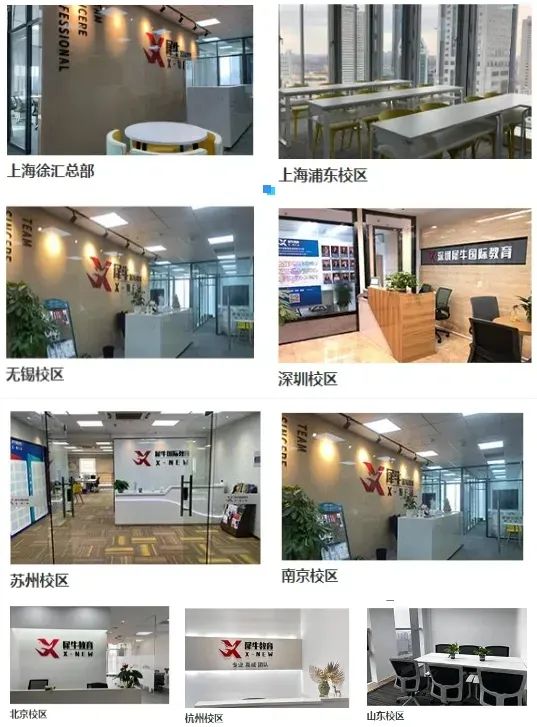
不方便去线下上课的同学们也可以选择线上直播课,直播结束后会生成回放,方便同学们回顾学习
国际竞赛 · 国际课程 · 语言培训 · 留学规划
💬 客服随时在线,欢迎拨打犀牛教育官网联系电话
📍 犀牛国际教育校区地址:上海、北京、深圳、广州、苏州、杭州、合肥、无锡、南京、武汉、成都、重庆、常州、宁波、天津、青岛、香港、新加坡、美国等



2026-04-28 浏览:1031
2026-02-02 浏览:957

2026-04-29 浏览:921
2026-02-26 浏览:920
2026-02-27 浏览:920
2026-02-27 浏览:918

2026-02-26 浏览:917
2026-04-20 浏览:909

联系我们
132-6165-3514
版权所有:Copyright © 2024- 犀牛国际教育总部 版权所有 备案号 沪ICP备2024045959号-1

免费热线
免费咨询电话
微信咨询
微信扫一扫